Skip to content

Alcantara — Surface exposure in context

Choose the evaluation route around the finished trim environment, rather than transferring approval between unrelated components.

Application exposure landscape

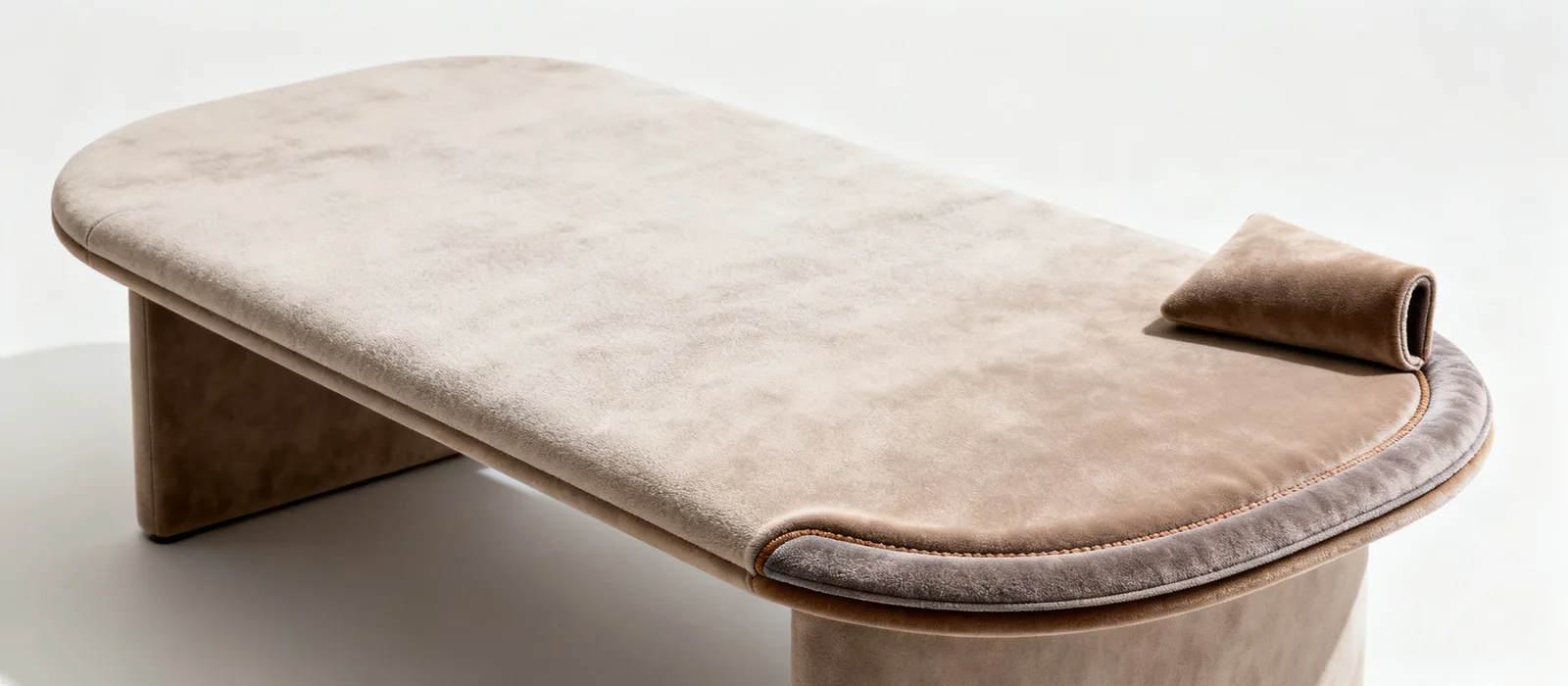
wide material review bench with nonwoven microfiber sample, curved trim mockup and small upholstery corner

Contact

For a touched trim panel, describe the frequency and type of interaction before comparing specimens. Abrasion resistance concerns a stated wear method and endpoint; it does not directly describe how the nap will look after handling. Compare the same orientation under consistent lighting, then assess handfeel and colorfastness separately. A softer reference can meet a design preference while showing a different visible surface response, so durability targets and tactile priorities must both be recorded. For an interior upholstered corner, inspect seams, tension and the junction between adjacent pieces. These are prospective assessment scenarios, not verified customer outcomes.

Exposure

An automotive interior can expose a surface to changing light, heat and cleaning practices. Write the relevant exposure into the application brief and request an applicable material-specific record. Do not infer outdoor weather resistance, universal flame performance or a cleaning tolerance from the material name. Water resistance and water vapor transmission describe different behaviors and do not prove that a trim assembly will dry or remain dimensionally stable. Compare the supplied surface state with the maintenance conditions expected in use. A certificate or a test for another finish, backing or specimen cannot close that gap.

Processing

For a headliner or formed trim discussion, retain the actual substrate, bonding route and assembly geometry where applicable. A surface can look acceptable as a flat cutting yet require a separate forming or bonding trial. Observe the curved region and edges as well as the central area; record nap direction, shade and any visual change after the agreed treatment. Contrast a stock reference with custom development by checking dated availability, batch identity and approval stages, rather than assuming one route has a shorter lead time. Before bulk approval, link the accepted specimen to usable width, GSM, composition, supply format and batch traceability. No performance threshold or processing window is asserted by this illustrative pathway.

Describe the use environment

Exposure, care and processing make the brief specific.

Discuss your fabric requirements