Alcantara — A surface-focused material profile
This material resource organizes questions about automotive trim and interior upholstery, with the limits of the available record kept visible.
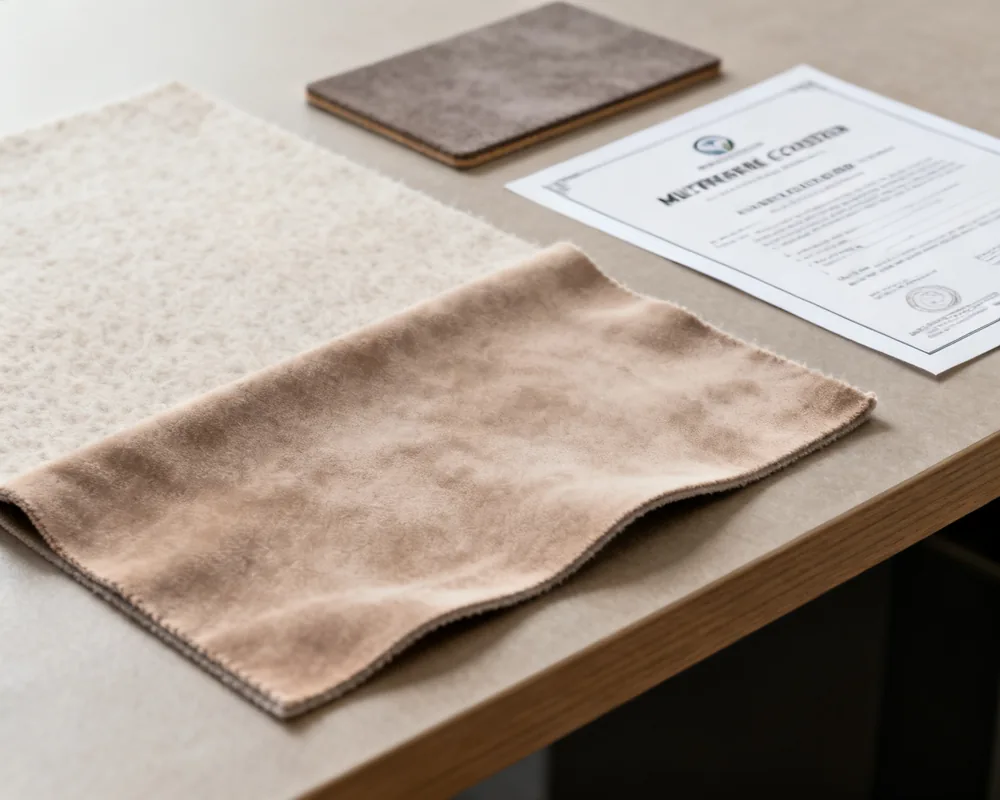
A factual profile
- Material scope
- Alcantara is considered here as a nonwoven microfiber composite surface material. The working focus is the appearance and handling of a suede-like surface in trim and upholstery decisions. It should not be collapsed into a generic PU-coated base fabric category, even where a broad catalogue classification groups several surface-material families together. The relevant composition, grade and supplied configuration must come from the reference being assessed, rather than from a search phrase or a category label.
- Application focus
- Automotive trim and interior upholstery provide the selection context. A headliner discussion should identify the formed component and any applicable backing or bonding route. A touched trim discussion should describe rubbing, skin contact and cleaning exposure. An upholstered panel adds orientation, seams and tension to the review. These are example decision settings, not completed customer projects, and they do not establish that every reference is approved for each use.
- Technical discussion
- A dated specimen makes technical questions more precise. Keep its identity, shade, nap direction, surface finish and applicable backing together. Ask for GSM, usable width, fiber composition and dimensional stability in the units and conditions used by the material record. Compare abrasion resistance with handfeel and visible surface change instead of reducing the review to one figure. Reports need a method and a defined specimen; certificates need a holder and a product scope. Neither a material name nor an attractive sample transfers an approval to an assembled part.
- Contact
- Use the inquiry route to describe a material question and the evidence already available. Identify the cutting, its orientation and the trim or upholstery setting before requesting a comparison. If a backing or bonding route is relevant, include the layer sequence and the point that needs review. Keep sample availability, quantity and order conditions as separate questions. An initial reference identifier, a dated sample description and the intended decision provide a practical starting point. Retain the physical specimen so that a later response can be compared with the same material.